Alan Hudson, April 3rd 2026 – Also available on LinkedIn
This piece was inspired by Nick Grist’s piece on the chance to be good (if you’re pushed for time, read that!)
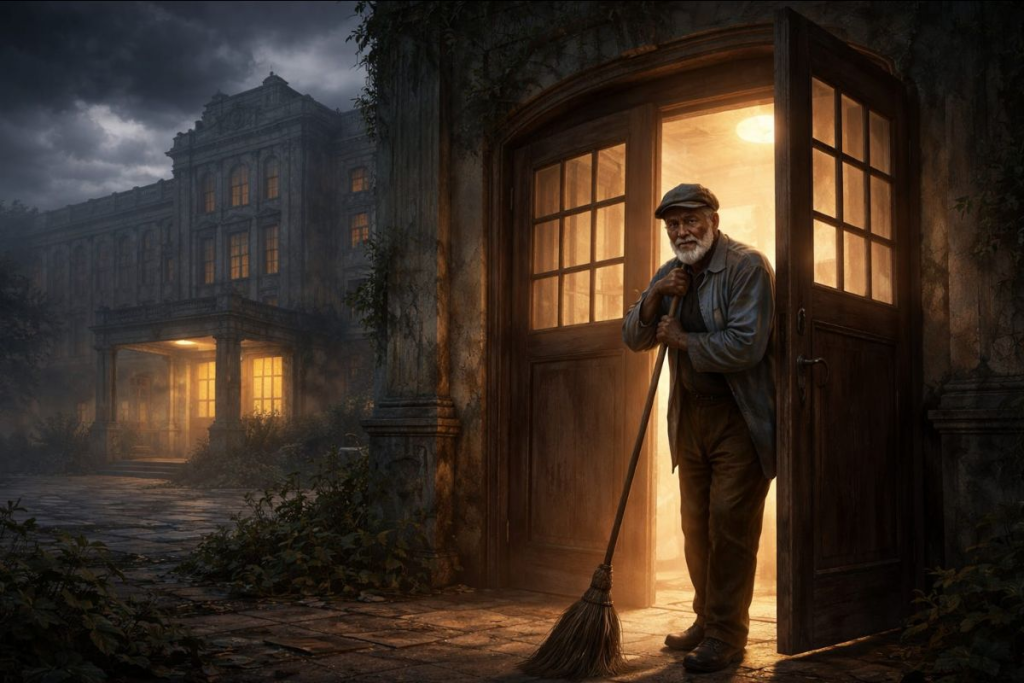
“The hospital had become a web of incentives, of quiet pressures and unspoken rules, of networks that protected those who took and exhausted those who did not. It was not broken; it was functioning exactly as it had been shaped to function.
Punishments came, of course. Audits, inspections, declarations of reform. They passed through the building like brief storms, drenching the surface and leaving the roots untouched.
Because nothing had changed the calculation. And so, nothing changed the outcome.”
Over the last year, my explorations of complexity have been practically enriched by becoming a member of the Living Vital community. Based in Stanmer park, a squirrel’s throw from the University of Sussex and 30 mins from Brighton by bike, Living Vital describes itself as a community of people “living deeply connected, vital lives with a clear sense of their role and responsibility in the human and more than human world.” The focus on connectivity and inter-being, and the gently spiritual feel, as well as the beautiful setting, is what attracted me.
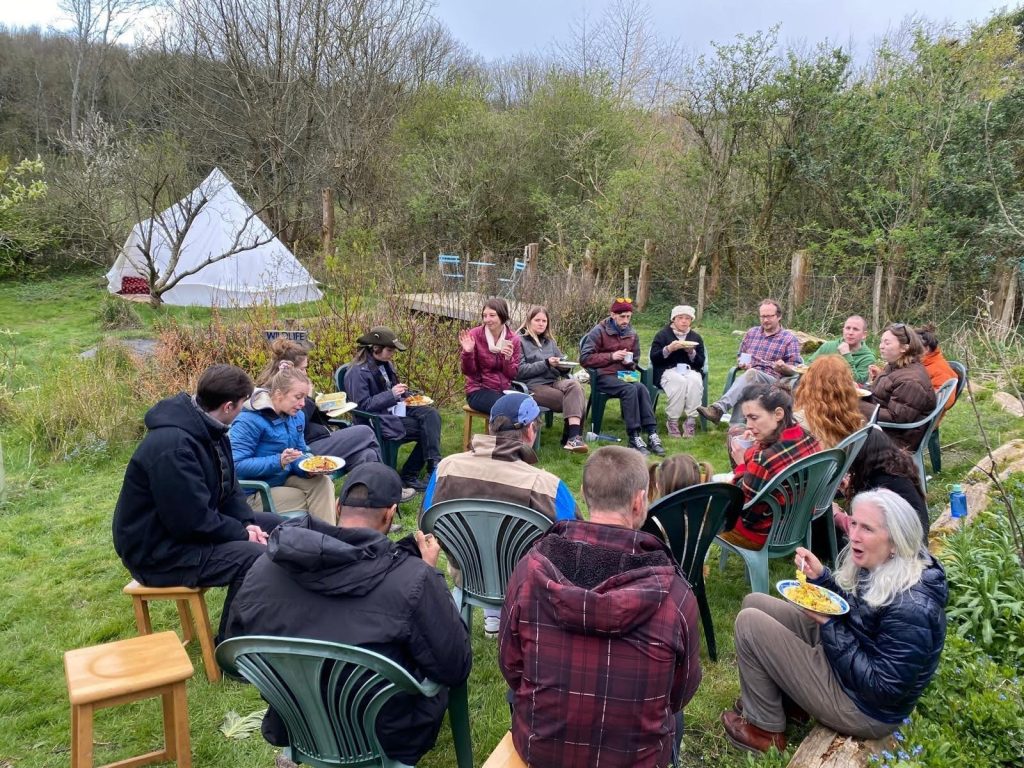
Becoming part of the Living Vital community is one of the best things I’ve done for years. Going along every couple of weeks, catching up with friends, making new friends, and pottering around the garden – doing what I can and learning as I go – has been amazing. It is a place where you can fully be yourself, showing up as you are, and be consistently met with kindness and care. You can also do as much or as little gardening as you want, which is a lovely sort of freedom. The mix of age ranges, and the engagement with local refugees’ groups is wonderful. Being part of the community has also informed my work on complex social challenges (see, for instance, my Autumn 2025 piece on landscapes of learning piece), bringing to life the idea that such challenges require tending, like a garden, rather than fixing, like a machine.
I’ve particularly appreciated the meditations that Nick Grist – one of the organisers along with his partner Alexandra Cotter – leads before the tea-drinking and gardening-proper starts. Nick and I talk quite a bit about our shared interests in connection, community and emergence. That is, I regularly pester him after a meditation, with enthusiastic appreciation, half-baked ideas, and encouragement about making his wonderful writing more widely available. As we’ve chatted, it’s become clear that Nick and I – along with the Living Vital community as a whole – are exploring similar landscapes of issues, and doing similar things to support the emergence of kinder and more loving communities and systems.
Earlier this week, I shared with Nick a report on corruption in health systems I’ve been working on, with its focus on regulatory landscaping and, in effect, policy gardening; designing policies that shape the social, economic and political environment, that in turn shapes people’s behaviours. A couple of days later, I was thrilled to see that Nick had riffed creatively on that report, with a short story called “the chance to be good”. Nick’s wonderful story explores the idea of corruption resulting not from moral failure but as a logical and inevitable conclusion of a system that rewards the individual and abandons the collective. It follows one woman’s quiet revolution inside a broken hospital, and asks what it would take, not to remove the weeds, but to change the soil itself.
Nick’s piece is way more creative than the report I drafted. Informed by his own life experience, it covers the same ground as the report, but in a richer, warmer and more human register. This makes for a more emotional, more evocative, more inspiring and more empowering perspective.
As Nick puts it …
Someone brought a pomelo and an orange into the same conversation not knowing what would emerge, only trusting that it would be something greater than either fruit alone and they were right: the grapefruit was not invented so much as believed into being. That is the spirit in which I read Alan’s report, and the spirit in which the chance to be good was written.
Years ago, working with a hospital in Bangalore, I watched something similar unfold: teaching porters, janitors and security staff about hygiene and infection control had an unexpected consequence. They still gathered in the evenings. They still shared stories. They still carried knowledge home and thereby contributed to reducing disease rates in their villages. Nobody planned that. It happened because people were trusted with understanding, and understanding, when it finds community, travels far beyond its origin.
Knowledge, facts and data speak to the head: they clarify, justify and solve. But stories speak to the heart. Emotion gives action its impetus, and when head and heart move together, we can act with real purpose. So often, research never finds the people who could bring its real treasure to life, because data alone cannot dream. These stories are oxygen to the communal fire of wisdom.
What we need is a return to the hive mind of the community: researchers in conversation with storytellers, with the people on the ground, with the dreamers. Because we are all, beneath our expertise and our caution, storytellers and dreamers and the fact that big dreams can be dismissed by narrow minds is no reason, ever, to stop dreaming them.
I’ve read Nick’s piece a couple of times, and have been brought to tears on each reading. So I’m excited to be able to share it, and to imagine the actions it might inspire. Have a look at his piece, imagine being in the hospital that Nick describes so well, witnessing its decline, and then, with the arrival of Amara, being part of the community, building on the bright spots, encouraging others and contributing to the hospital’s revival.
“Amara introduced what she called the Circle of Witnesses. In each ward, a rotating role: a staff member whose only duty was to notice and name the good. Not performance, not targets met or quotas fulfilled, but the acts that otherwise went unmarked. The pharmacist who caught a dangerous dosage error with nothing to gain from it. The porter who sat with a frightened patient who had no visitors. The acts that held a place together precisely because they were invisible.
The Witnesses wrote these down in notebooks; ordinary ones, kept at each nurses’ station. No one made a policy about it but the books were filled anyway.
And those acts, once witnessed, changed something. Not in the people who performed them, who had been performing them all along, but in those who now saw them. It expanded what people believed was normal. Then what they believed was possible. Then what they believed was expected of them.”
With some hope, connection and creativity, many things are possible. Thanks to Nick, Alex, and all the Living Vital crew, for the kindness, the collaboration, the gardening, the encouragement, and the inspiration. I’m glad to be part of the community.
To read more of Nick’s writing, including Breaking bread about a community gardening session, and The Blizzard for a powerful tale of birth, death, memory and connection, check out Nick’s substack, here.